Oct 09, 2026
Last Updated: 11 October 2026
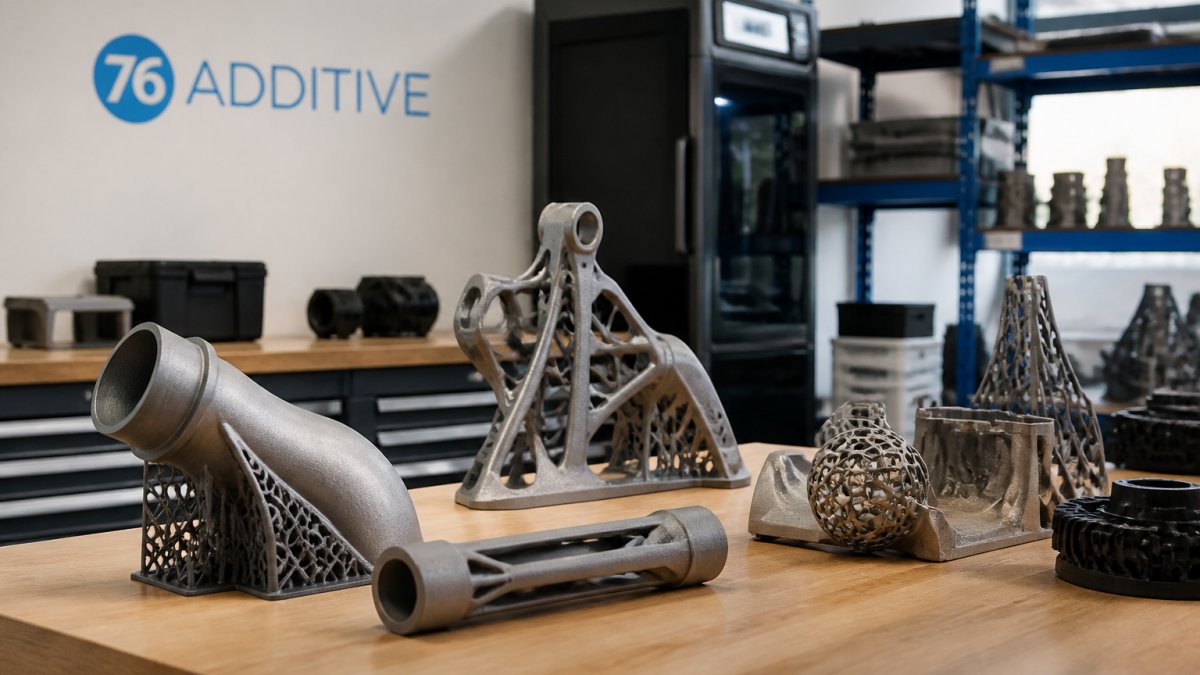
Traditional manufacturing methods like injection moulding and CNC machining rely on subtractive processes or rigid tooling. They struggle with intricate internal channels, lattice structures, and organic shapes that modern design demands. Creating complex tooling takes weeks to develop. Any design change means starting over.
The real constraint isn't the material, it's the process itself. A conventional machine can only cut, mill, or press in predictable directions. Undercuts, internal voids, and nested geometries become either impossible or prohibitively expensive to produce. This limitation forces designers to simplify parts, compromising performance and functionality.
Additive manufacturing for complex geometries solves this constraint entirely. Instead of removing material or forcing it into moulds, 3D printing builds parts layer by layer, following your exact design. Complexity becomes an advantage, not a cost penalty.
Additive manufacturing for complex geometries works by depositing material in precise, controlled layers. Each layer bonds to the one below, creating solid structures that would be impossible using traditional methods. The process reads your 3D model and translates it directly into physical form.
The freedom this creates is transformative. Internal channels can wind through a part without tooling constraints. Lattice structures reduce weight while maintaining strength. Organic geometries that improve aerodynamics or ergonomics are produced as easily as simple blocks.
What separates additive manufacturing from conventional processes is that the machine doesn't care about complexity. A simple box and a part with fifty internal features cost the same to produce, the difference lies only in material volume and print time. This inverts the economics of manufacturing entirely.
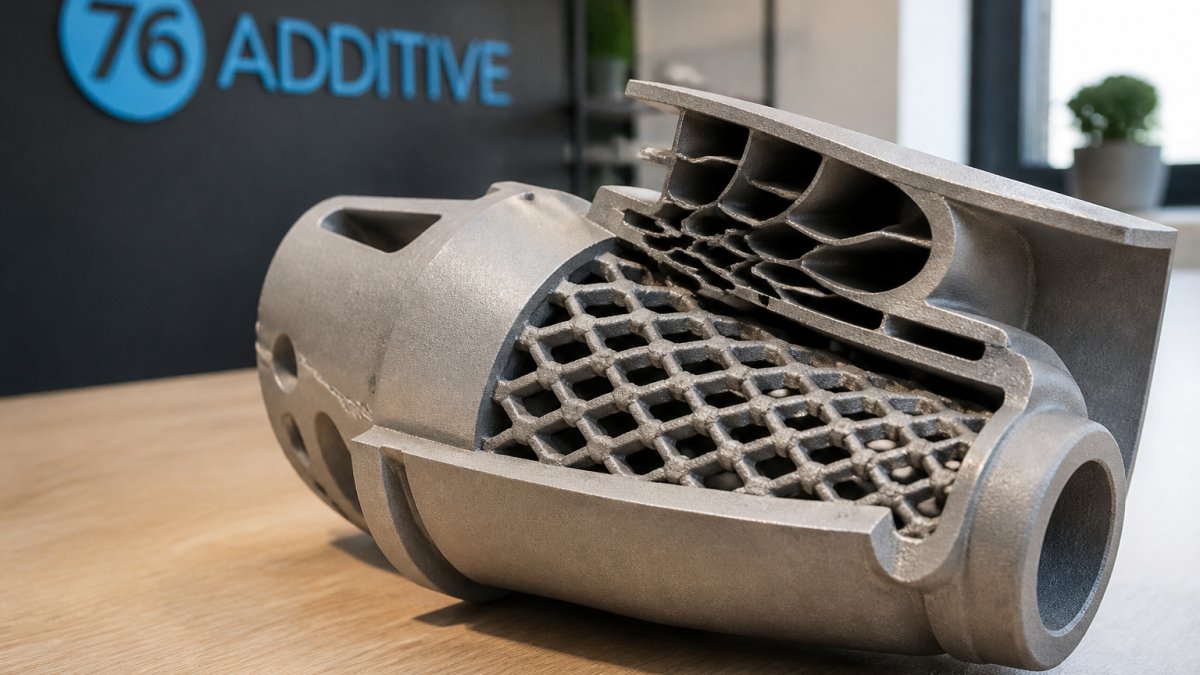
Designing for additive manufacturing requires a different mindset than traditional CAD. The constraints you're used to no longer apply, but new ones emerge. Understanding design for additive manufacturing means thinking about how layers stack and how support material affects your final part.
Wall thickness matters more in additive manufacturing than in injection moulding. Walls that are too thin will fail; walls that are too thick waste material and time. Most processes require a minimum wall thickness between 0.8mm and 1.5mm, depending on the technology.
Support structures are temporary scaffolding the printer builds to hold overhanging geometry. They're removed after printing, leaving marks on your part. Smart design minimises support material by orienting parts cleverly or using self-supporting geometries. This reduces cost, improves surface finish, and shortens production time.
Orientation within the printer's build chamber affects strength and surface quality. Parts printed vertically have different mechanical properties than those printed horizontally. Grain direction matters. A design that works in one orientation might fail in another.
Several additive manufacturing techniques excel at producing complex parts, each with distinct strengths. The right choice depends on your material needs, tolerance requirements, and production volume.
Multi Jet Fusion deposits binding agent onto powder in precise patterns, then fuses the powder with heat. The result is a dense, functional part with excellent detail resolution. MJF handles complex geometries remarkably well because the powder supports every overhanging surface, no separate support structures needed.
Parts produced using MJF have fine surface finishes and tight dimensional tolerances. Internal channels print cleanly. Lattice structures emerge with crisp edges. For additive manufacturing of complex geometries where precision matters, MJF is the standard choice. Materials include nylon-based polymers that are tough and durable enough for functional end-use components.
The process is fast compared to some alternatives, making it cost-effective for low to mid-volume production. A single build chamber can hold hundreds of parts simultaneously, which amortises the setup cost across multiple components.
Carbon's Digital Light Synthesis (DLS) technology uses UV light to cure liquid resin in precise patterns. The result is parts with exceptional surface quality and fine detail. For additive manufacturing applications demanding high resolution, DLS excels.
DLS produces parts with smooth surfaces and tight tolerances. Complex internal features print with remarkable clarity. The technology is slower than MJF, each part takes longer to produce, but the quality justifies the time investment for applications where precision is critical.
Materials available through DLS include rigid and flexible resins. This versatility makes it suitable for complex geometries in consumer electronics, medical devices, and custom components where both strength and detail matter.
Successful additive manufacturing for complex geometries follows consistent principles. These guidelines prevent costly mistakes and ensure your parts perform as intended.
Start by defining your tolerance requirements clearly. Additive manufacturing can hold tight tolerances, but tighter tolerances cost more time and money. Standard tolerances for most processes sit around ±0.3mm. If you need ±0.1mm, expect higher costs and longer lead times.
Wall thickness uniformity prevents weak points. Transitions from thick to thin walls create stress concentrations. Gradual tapers and consistent wall thickness throughout your geometry improve strength and printability.
Avoid sharp internal corners. Rounded radii, even small ones like 0.5mm, improve part strength and reduce support material. Sharp corners concentrate stress and are harder for the printer to execute cleanly.
Consider your material's properties. Nylon-based materials from MJF are tough and flexible. Resins from DLS can be rigid or flexible depending on the formulation. Your geometry should match your material's capabilities. A lattice structure works beautifully in nylon but might be fragile in brittle resin.
Design Consideration | Best Practice | Impact |
|---|---|---|
Wall thickness | 0.8-1.5mm minimum | Prevents failure and weak points |
Internal corners | Radius ≥0.5mm | Improves strength and finish |
Orientation | Minimise overhangs | Reduces support material and cost |
Lattice density | Match load requirements | Balances weight and strength |
Surface finish | Design for post-processing | Achieves desired aesthetics |
Additive manufacturing for complex geometries isn't always the right choice, even when the geometry is complex. The decision depends on volume, timeline, and cost tolerance.
Traditional injection moulding excels at high-volume production. Once tooling is complete, unit costs drop dramatically. If you're producing 50,000 units annually, injection moulding is almost certainly cheaper per part. The upfront tooling cost is spread across thousands of units, making it economical.
Additive manufacturing wins for low to mid-volume production. No tooling investment means you can start production immediately. For 100 to 5,000 units annually, additive manufacturing typically gets to market faster.
Speed matters in competitive industries. If you need working prototypes in days rather than weeks, additive manufacturing is non-negotiable. If you're iterating a design rapidly, testing different internal channel configurations or lattice densities, additive manufacturing lets you validate ideas before committing to tooling.
Complexity drives the decision too. A simple box favours traditional manufacturing at volume.
Material choice directly affects how successfully your complex geometry will print and perform in service.
Nylon-based materials from MJF processes are tough, flexible, and impact-resistant. They handle complex geometries beautifully because the powder bed supports every overhanging surface. Nylon parts can be dyed, machined, or assembled post-print. For functional components that need to survive real-world use, nylon is the default choice.
Rigid resins from DLS processes produce parts with excellent surface finish and fine detail. They're ideal for components where precision and aesthetics matter more than impact resistance. Medical devices, electronics housings, and decorative parts often use rigid resins.
Flexible resins bridge the gap. They maintain detail and surface quality while offering some impact resistance. For parts that need to flex slightly or absorb shock, flexible resin is a strong choice.
Consider post-processing requirements. Nylon parts accept dyes, coatings, and mechanical finishing well. Resin parts are trickier, some finishes don't bond well to cured resin. Plan your material choice around the final surface finish you need.
Additive manufacturing for complex geometries is no longer experimental, it's producing real components across industries. The applications reveal where this technology creates genuine competitive advantage.
Cycling components benefit enormously from complex geometries. Internal reinforcement ribs, integrated cable routing, and optimised weight distribution are all easier to achieve with additive manufacturing. 76 Additive produces components for many UK cycling brands, creating custom frames and components that would be impossible or prohibitively expensive using traditional methods.
Drone components showcase the technology's potential.
Consumer electronics use additive manufacturing for custom enclosures, heat-dissipating structures, and integrated mounting features.
Sports equipment, from climbing holds to custom prosthetics, leverages complex geometries to improve performance. Lattice structures reduce weight without sacrificing strength. Organic shapes improve ergonomics. Integrated features eliminate assembly steps.
The pattern is consistent: where geometry complexity creates performance advantage, additive manufacturing wins. Where simplicity and high volume dominate, traditional manufacturing remains superior.
Complex geometries push the boundaries of what's possible in product design. Traditional manufacturing forces compromises, simplifying shapes, accepting assembly complexity, or accepting high tooling costs. Additive manufacturing eliminates these constraints entirely.
If you're designing parts with intricate internal features, organic geometry, or integrated components that would normally require assembly, additive manufacturing deserves serious consideration. The technology has matured beyond prototyping into reliable production of functional end-use components.
76 ADDITIVE specialises in producing high-quality, repeatable components using state-of-the-art MJF and Carbon DLS technology. Whether you're validating a prototype or ramping production, our team in Ely can help you move from concept to finished component faster and more cost-effectively than traditional manufacturing allows. Get an instant quote and discuss your specific geometry requirements with our team.
Additive manufacturing builds parts layer by layer, allowing creation of internal channels, lattice structures, and undercuts that would be impossible or prohibitively expensive with traditional methods like injection moulding. This freedom in design enables engineers to optimise components for weight, strength, and functionality simultaneously—something traditional subtractive processes cannot achieve.
Core principles include minimising support material, designing for the specific process being used, considering wall thickness and feature size limitations, and optimising part orientation for printing. Understanding draft angles, bridging capabilities, and material flow ensures your complex geometry prints successfully. 76 Additive provides design guidance to help you avoid costly revisions before production begins.
Yes, modern additive manufacturing processes achieve tolerances suitable for many aerospace and automotive applications, though they differ from traditional machining. Multi Jet Fusion and Carbon DLS technologies deliver repeatable accuracy across multiple batches. However, some applications may require post-processing or hybrid approaches. Discussing your specific tolerance requirements with your manufacturing partner ensures the process is right for your part.
Additive manufacturing eliminates expensive tooling investment, making it ideal for volumes between 100 and 5,000 units per run. Traditional injection moulding requires significant upfront tooling costs that only become economical at higher volumes. For startups and SMEs testing designs or producing bridge quantities whilst ramping to full production, additive manufacturing typically offers faster time-to-market and lower initial investment.
Material choice depends on your application's performance requirements. Nylon-based materials offer strength and flexibility, whilst advanced polymers provide chemical resistance or thermal stability. For complex geometries, material selection must account for how the process handles thin walls, internal features, and support structures. Your manufacturing partner can recommend the optimal material for your specific design and performance needs.
Start with a small test batch to validate your design before committing to larger production runs. This approach reduces risk and allows you to refine geometry, wall thickness, and feature placement based on real results. Many manufacturers, including 76 Additive, offer design feedback and can highlight potential issues before printing, saving time and material costs.
Limitations include maximum part size constraints, material property differences compared to traditional manufacturing, and the need for careful design to minimise support material. Some geometries may require post-processing or hybrid manufacturing approaches. Surface finish may also require additional finishing steps. Understanding these constraints during the design phase prevents costly iterations.
Opening Hours (our printers run through the night)
Monday - Friday, 9am - 5pm


76 Additive
19 Hall Barn Road Industrial Estate
Isleham, Ely
Cambridgeshire, CB7 5RJ
76 Projects t/a 76 Additive
Registered in England & Wales Company no: 10235633
VAT: 245 830 796