Oct 23, 2026
Last Updated: October 23, 2026
Quick Summary
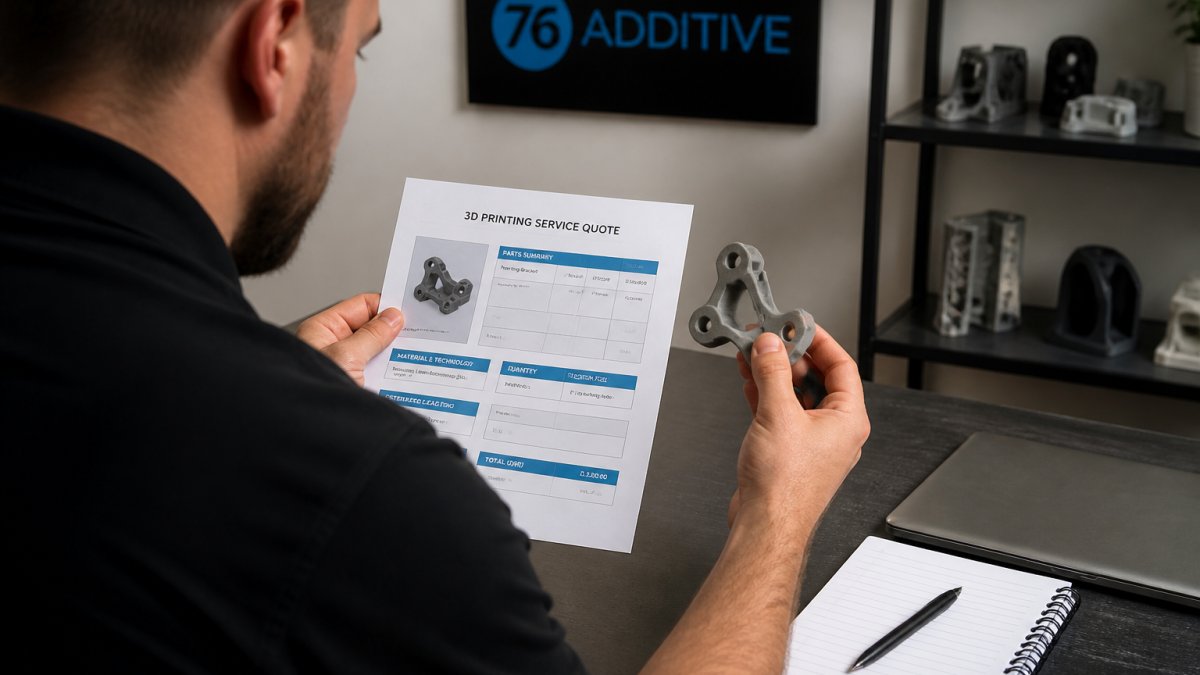
A 3D printing service quote is a detailed estimate outlining the cost, timeline, and specifications for producing your parts using additive manufacturing technology. It includes material costs, machine time, finishing requirements, and lead times, allowing you to get accurate pricing before committing to production.
An on-demand 3D printing service quote is a detailed estimate provided by a manufacturing partner that outlines the cost, timeline, and specifications for producing your parts using additive manufacturing technology. Unlike traditional manufacturing, which requires expensive tooling investment upfront, on-demand 3D printing allows you to get accurate pricing before committing to production.
At 76 ADDITIVE, we've found that understanding what a quote contains is the first step toward making the right manufacturing decision. A proper quote goes far beyond a simple price figure. It reflects your design requirements, material choices, production volume, and delivery timeline.
When you request a quote from a professional service provider, expect to receive detailed breakdowns covering material costs, machine time, finishing requirements, and lead times. The quote process itself has become significantly faster. Many providers now offer instant quotes through online platforms.
Before you can receive an accurate quote, you'll need to prepare specific information about your project. The more detail you provide upfront, the more reliable your estimate will be.
Your design file is the foundation of any quote. Most on-demand providers accept standard CAD formats including STL, STEP, and IGES files. These formats contain all the geometric information needed to assess your part's complexity, wall thickness, and support requirements.
When you submit your file, service providers evaluate several critical design factors. Wall thickness matters significantly, parts with walls that are too thin may fail during printing or post-processing, whilst overly thick sections waste material and increase costs. Surface finish requirements also affect pricing. A part requiring a smooth, polished surface will cost more than one that can tolerate standard as-printed finish.
Design features like internal channels, undercuts, and intricate geometries determine which printing technologies are suitable. Some materials and processes handle complex geometry better than others. This is why communicating your exact design specifications, not just a general description, helps providers give you an accurate quote.
Your production volume dramatically influences pricing per unit. A single prototype costs considerably more per part than a batch of 100 identical components. This is because setup costs, machine calibration, material preparation, and quality checks, are spread across fewer units in small runs.
When requesting quotes, be clear about whether you need a one-off prototype or multiple production batches. If you're planning to iterate your design based on testing results, mention that upfront. Some providers offer tiered pricing that rewards larger volumes, making it worth understanding your full production roadmap before requesting quotes.
Lead time expectations also tie to volume. A single urgent part may take longer including post-processing and quality checks, whilst a batch of 50 parts might take longer because of production scheduling. Communicating your timeline helps providers allocate capacity and may reveal cost-saving opportunities if you can be flexible on delivery dates.
Material selection is one of the most important decisions affecting both your quote and your part's performance. Different materials suit different applications, and the material you choose directly impacts cost, strength, durability, and lead time.
For functional parts that will experience stress or environmental exposure, material properties matter far more than aesthetics. Nylon-based materials like Nylon 12 offer excellent mechanical properties and are ideal for components requiring flexibility and impact resistance.
Resin-based materials suit applications requiring high precision and smooth surfaces. They're particularly valuable when tolerances are critical or when you need transparent or translucent parts. Rigid polyurethane offers a middle ground, providing good mechanical properties at lower cost than some alternatives.
The material you select influences your quote in multiple ways. Some materials require longer print times, specialist post-processing, or additional quality verification.
Lead time is the period between placing your order and receiving finished parts. For on-demand 3D printing, lead times are typically measured in weeks rather than months, which is one of the key advantages over traditional manufacturing methods.
Standard lead times for most service providers are typically measured in weeks from order confirmation to delivery. This includes printing time, post-processing (support removal, cleaning, curing), quality inspection, and packaging. Urgent expedited services may be available at a premium cost.
What affects your specific lead time? Design complexity matters, parts with intricate internal geometries or tight tolerances require longer inspection and may need additional validation steps. Batch size also plays a role.
Material choice influences lead time too. Some materials require extended curing periods after printing. Others need specialist post-processing that takes additional days.
If you're working to a tight deadline, communicate that early. Some providers can adjust scheduling or offer rush services, though these typically cost more.
Pricing for on-demand 3D printing service quotes depends on multiple interconnected factors. Understanding what drives costs helps you make smarter decisions and identify opportunities to reduce expenses without compromising quality.
Material cost is the most obvious factor. Different materials have different raw material prices, and some require specialist handling or storage.
Machine time is another significant cost driver. Parts that require long print times cost more because they occupy machine capacity that could otherwise be used for other jobs.
Post-processing labour affects pricing substantially. Parts requiring hand-finishing, surface treatment, or extensive support removal cost more than parts that can be used directly from the machine.
Volume discounts are common in the industry. A quote for fewer parts will typically show a higher per-unit cost than a quote for more parts of the same design.
When comparing quotes from different providers, ensure you're comparing equivalent specifications. A cheaper quote might reflect lower quality standards, longer lead times, or less comprehensive post-processing.
The process of requesting and comparing quotes has become more simplified in recent years, thanks to online platforms and standardised workflows.
Many modern on-demand 3D printing platforms now offer instant quoting systems. You upload your CAD file, select your material, specify your quantity, and receive a price quote within minutes.
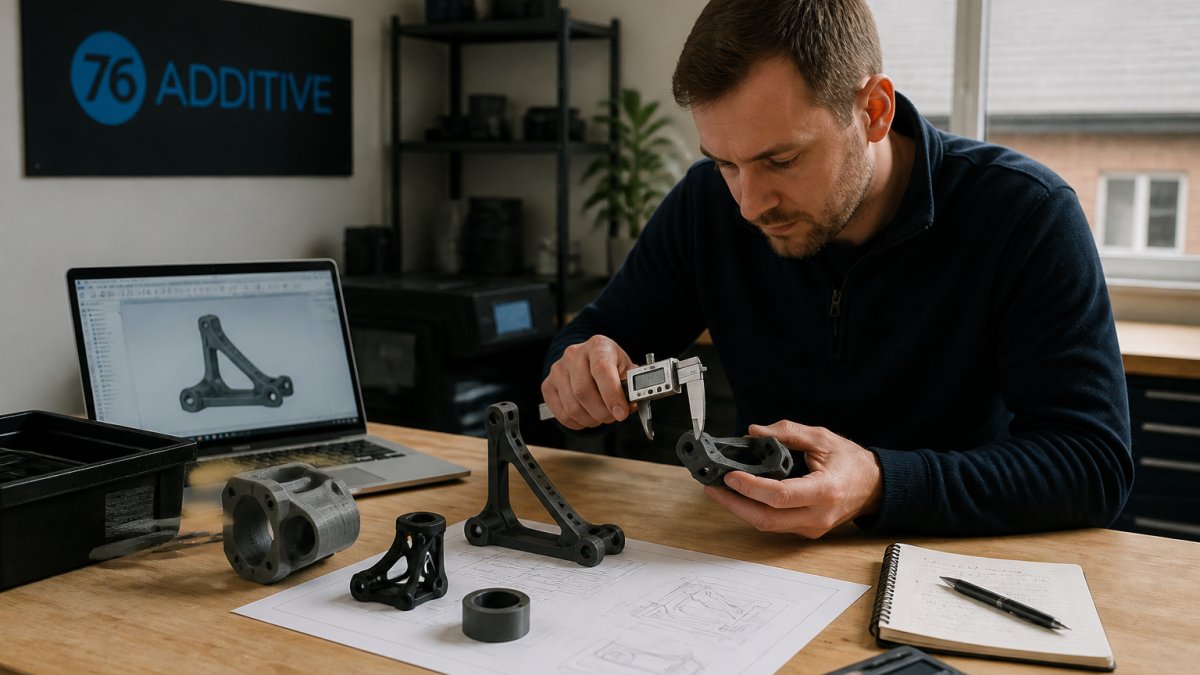
The instant quote workflow is straightforward. First, you prepare your design file in a standard format like STL. Next, you upload it to the provider's platform. The system then guides you through material selection, quantity, and delivery timeline options.
For more complex projects, particularly those requiring custom finishing, quality certifications, or design consultation, you may need to request a formal quote from the provider's engineering team. This involves submitting your design, specifications, and any special requirements, then waiting for a detailed response.
When you've gathered quotes from multiple providers, resist the temptation to choose based solely on price. A comprehensive comparison evaluates several dimensions.
First, verify that all quotes are based on identical specifications. Same material? Same quantity? Same delivery timeline? Same post-processing requirements? If specifications differ, you're not comparing equivalent services.
Next, examine the breakdown. A detailed quote shows material costs, machine time, post-processing labour, and shipping separately.
Lead time consistency matters too. If one provider quotes two weeks and another quotes four weeks for the same part, understand why.
Quality specifications deserve careful attention. Ask about tolerance capabilities, surface finish standards, and quality inspection procedures. Some providers offer certified quality reports; others provide basic visual inspection. For functional parts, this difference is significant.
Finally, consider the provider's communication approach. A provider willing to discuss your design, suggest material alternatives, or answer technical questions demonstrates genuine partnership thinking.
The best quotes come from direct conversation with your service provider's engineering team, not just automated systems. Whilst instant online quotes are convenient, they can't replace human expertise and problem-solving.
When you speak directly with your provider, you gain access to their experience. They've worked with many parts across diverse industries.
Direct communication also enables design optimisation. A skilled engineer might suggest minor design modifications that dramatically reduce costs or improve performance. They might recommend a different material that costs less whilst meeting your functional requirements.
At 76 ADDITIVE, we prioritise direct communication with every client. Our team in Ely, Cambridgeshire works closely with you to understand your project goals, evaluate your design, and develop quotes that deliver genuine value.
Direct communication also builds confidence. When you can discuss your concerns, ask questions, and receive clear answers, you feel more comfortable committing to a partnership. You understand not just what you're paying for, but why you're paying it.
You'll typically need to upload your design file (usually STL or STEP format), specify the material you want, choose your desired finishing options, and confirm your required quantity and delivery date. Many providers, including 76 ADDITIVE, offer instant quoting systems where you upload your model and select these parameters directly. Be prepared to provide details about any specific tolerances or functional requirements your parts must meet.
Lead times vary based on complexity, material choice, and current demand. Simple parts may be ready quickly, while more complex geometries or large batches can take longer. When requesting your on-demand 3D printing service quote, specify your deadline so providers can confirm feasibility. Direct communication with your provider helps ensure realistic timescales and can sometimes unlock faster turnaround options for urgent projects.
Your industrial 3D printing service pricing depends on material cost, part complexity, build time, post-processing requirements, and batch volume. Larger quantities typically reduce per-unit cost. Surface finishes, support removal, and quality assurance testing also influence the final price. Since pricing varies significantly based on your specific needs, requesting a detailed quote from your chosen provider is the most accurate way to understand costs for your project.
For functional parts, materials like nylon (PA12) and rigid thermoplastics offer excellent durability and mechanical properties. Carbon-filled variants provide enhanced strength for demanding applications. The best 3D printing materials for functional parts depend on your specific requirements: temperature resistance, chemical exposure, mechanical stress, and intended lifespan. Discuss your application in detail when requesting your on-demand 3D printing service quote to ensure the provider recommends suitable materials.
Requesting an on-demand 3D printing service quote is the first step toward manufacturing parts faster and more cost-effectively than traditional methods allow. The right quote should be transparent, detailed, and backed by genuine understanding of your project. When you're ready to move forward, contact 76 ADDITIVE to discuss your requirements. Our team can evaluate your design, recommend optimal materials and processes, and provide a quote that reflects genuine value for your business needs.
Opening Hours (our printers run through the night)
Monday - Friday, 9am - 5pm


76 Additive
19 Hall Barn Road Industrial Estate
Isleham, Ely
Cambridgeshire, CB7 5RJ
76 Projects t/a 76 Additive
Registered in England & Wales Company no: 10235633
VAT: 245 830 796